
Iron County Criminal Court Records
A criminal court record is the court-maintained file for a prosecution. In Iron County, the Circuit Clerk keeps Criminal case records along with Civil, Probate, Domestic, and Juvenile records. The file may begin with a complaint, information, indictment, citation, or warrant-related filing. It then grows as the court enters hearings, notices, bond orders, attorney appearances, motions, plea entries, trial settings, dispositions, sentence orders, probation conditions, and financial obligations.
Iron County is in Missouri's 42nd Judicial Circuit. Criminal cases may involve circuit, associate circuit, and municipal functions depending on the charge, the stage, and whether the matter is a felony, misdemeanor, traffic misdemeanor, or ordinance violation. Ironton municipal matters route through the 42nd Judicial Circuit structure by city code, so some local ordinance and traffic criminal settings may appear through the same court-record path.
Search Iron County Criminal Cases
The main online search point is Missouri Case.net. Search by defendant name, case number, filing date, or scheduled hearing when those options fit the facts known. A charge-focused search should not stop at the first line of the docket. Open the case and review the current disposition for each count, because dismissed, amended, reduced, or pending charges can appear beside convictions.
- Open Case.net and choose litigant name, case number, filing date, or hearing search.
- Filter to Iron County or the 42nd Judicial Circuit when court filtering appears.
- Open the matching criminal case and confirm the defendant, case number, filing date, and charge list.
- Read the docket from filing through disposition to understand pleas, motions, warrants, and sentencing.
- Contact the Circuit Clerk for certified criminal case copies, older files, or documents not available online.
The full case file differs from the arrest-to-charge pathway. For booking and the first filed counts, the related Iron County arrest records and court charges page focuses on charges after arrest.
Case.net can also show court calendar information, Pay By Web or Plead and Pay options for eligible cases, and Track This Case alerts when the system supports them. Those tools do not make every criminal document public. A public docket may show that an event happened while the filed document, exhibit, victim information, or redacted material remains unavailable for remote viewing.
Iron County Criminal Case Flow
A criminal case record changes as the case moves. The same file can show a warrant, bond setting, arraignment, motion hearing, plea, dismissal, trial event, sentence, probation, and later warrant or payment activity. The docket should be read in sequence because a charge listed early in the case may not be the final outcome.
| Stage | How It Appears in the Record |
|---|---|
| Charges Filed | Complaint, information, indictment, citation, or prosecutor-filed count opens or adds to the case. |
| Arraignment | The defendant is formally advised of charges and enters an initial plea or setting. |
| Pretrial / Motions | Attorney entries, discovery, bond motions, continuances, suppression motions, and hearing settings may appear. |
| Plea or Trial | The case may resolve by plea, dismissal, amendment, trial verdict, or other court order. |
| Disposition | Each charge receives an outcome such as guilty, dismissed, amended, transferred, or acquitted. |
| Sentencing | Sentence, probation, costs, restitution, fines, or DOC transfer may be entered. |
Process view: Charges Filed to Arraignment to Pretrial to Plea or Trial to Disposition to Sentencing. Later docket entries can still matter if probation, warrants, costs, or expungement petitions follow.
What Iron County Criminal Records Show
Criminal court records usually combine party information, charge details, hearing history, court orders, and final outcome. They may also include bond, warrant, probation, and financial data. Public remote access does not mean every document is visible; sealed exhibits, juvenile information, victim information, medical records, and protected identifiers may be absent or redacted.
| Field | What It Shows |
|---|---|
| Case Number | The Missouri court identifier for the criminal case. |
| Defendant | The person charged in the criminal case. |
| Charge | The alleged offense, statute or ordinance reference when shown, and severity level. |
| Bond | Release conditions, bond amount, surety details, or bond changes if public. |
| Docket Entries | Hearings, filings, warrants, continuances, orders, returns, payments, and court actions. |
| Plea | The defendant's formal response, such as guilty or not guilty. |
| Disposition | The outcome for the case or each charge. |
| Sentence | Punishment, probation, fines, costs, restitution, or DOC-related custody if imposed. |
Criminal Record Terms
Several criminal record terms need a plain reading. Arraignment is the first formal appearance or plea stage. A plea is the defendant's formal response to a charge. Bond means money or conditions that secure release and appearance. A surety is a person or bond company guaranteeing appearance. Probation is a court-supervised sentence in the community.
Disposition and sentence should be read together. The disposition tells how the charge ended, while the sentence explains the punishment or court conditions imposed after conviction. Financial fields can include court costs, fines, restitution, bond, fees, payment status, or Pay By Web eligibility. A later warrant entry may mean a missed appearance, probation issue, unpaid obligation, or other court order, so the docket sequence matters.
Charges Versus Convictions
Being charged is not the same as being convicted. A prosecutor may file counts that are later amended, reduced, dismissed, or resolved through a plea to a different count. A criminal court record should be read count by count, with attention to the disposition date and sentence terms.
| Point | Charge | Conviction |
|---|---|---|
| Meaning | An accusation filed in court. | A judgment or plea outcome that the defendant is guilty. |
| Timing | Appears near the start or amendment stage. | Appears after plea, trial, or final disposition. |
| Record risk | May be pending, dropped, amended, or dismissed. | May carry sentence, probation, fines, or collateral effects. |
| How to read | Check current status for each count. | Check sentence and whether later relief was granted. |
Prosecutor Role in Iron County Cases
The Iron County Prosecuting Attorney, Brian Parker, is the local office that files and prosecutes state criminal charges. Law enforcement may make an arrest or referral, but the filed charge record often depends on the prosecutor's charging decision. The prosecutor may file, amend, reduce, dismiss, or proceed on charges as the case develops.
The prosecutor is not the custodian for certified court case copies. Use the Circuit Clerk for criminal court records and case-copy logistics. Use the prosecutor page for prosecutor-office contact and victim-service context, not as a public criminal-record database. The Missouri DPS Crime Victim Services Unit also lists Iron County victim-service contacts, which can be relevant to victims but not to case-file access.
Research did not locate a specific official Iron County public defender office contact in the accessible sources. Missouri public defender representation is state-administered, so a defendant should ask about appointment procedure at first appearance, verify the current Missouri State Public Defender district directory, or contact the Circuit Clerk for court logistics. Do not treat the prosecutor, victim-service provider, or clerk as defense counsel.
After Sentencing Records
A criminal court record may show sentence terms, probation, fines, restitution, and whether a case closed, but it is not the same as a live custody or supervision database. If a person is sentenced to prison, placed on probation, or released to parole, the Missouri DOC Offender Search may become the better status tool. DOC search covers active offenders, including probationers and parolees, and aliases, but it does not show discharged offenders and may omit people for safety, security, or confidentiality reasons.
Victims with DOC custody or notification questions should use DOC Victim Services or VINE where Missouri agency data is available. A court docket can show that sentencing happened, while DOC or VINE may show whether the person is currently in custody or under supervision. The records answer different questions.
Sealed and Expunged Criminal Records
Missouri Chapter 610 includes arrest-record, closed-record, and expungement provisions, including the criminal expungement path referenced in research. Expungement is a petition process filed in the court with jurisdiction over the offense. It is not a routine records request, and eligibility depends on the current statute, waiting periods, excluded offenses, notice to agencies, and any objection by the prosecutor or law-enforcement agencies.
| Point | Sealed | Expunged |
|---|---|---|
| Basic effect | Hidden from ordinary public view by law or court order. | Removed or sealed from public access after statutory relief is granted. |
| How it happens | May result from case type, statute, or judge's order. | Requires a petition and court order under Chapter 610 rules. |
| Public search result | May be limited or absent. | Public Case.net and background visibility can change. |
| Limits | Some authorized users may still have access. | Some licensing, employment, or government exceptions may still apply. |
The Missouri juvenile statute range source is included because juvenile criminal-related records are not treated like ordinary adult public criminal files.
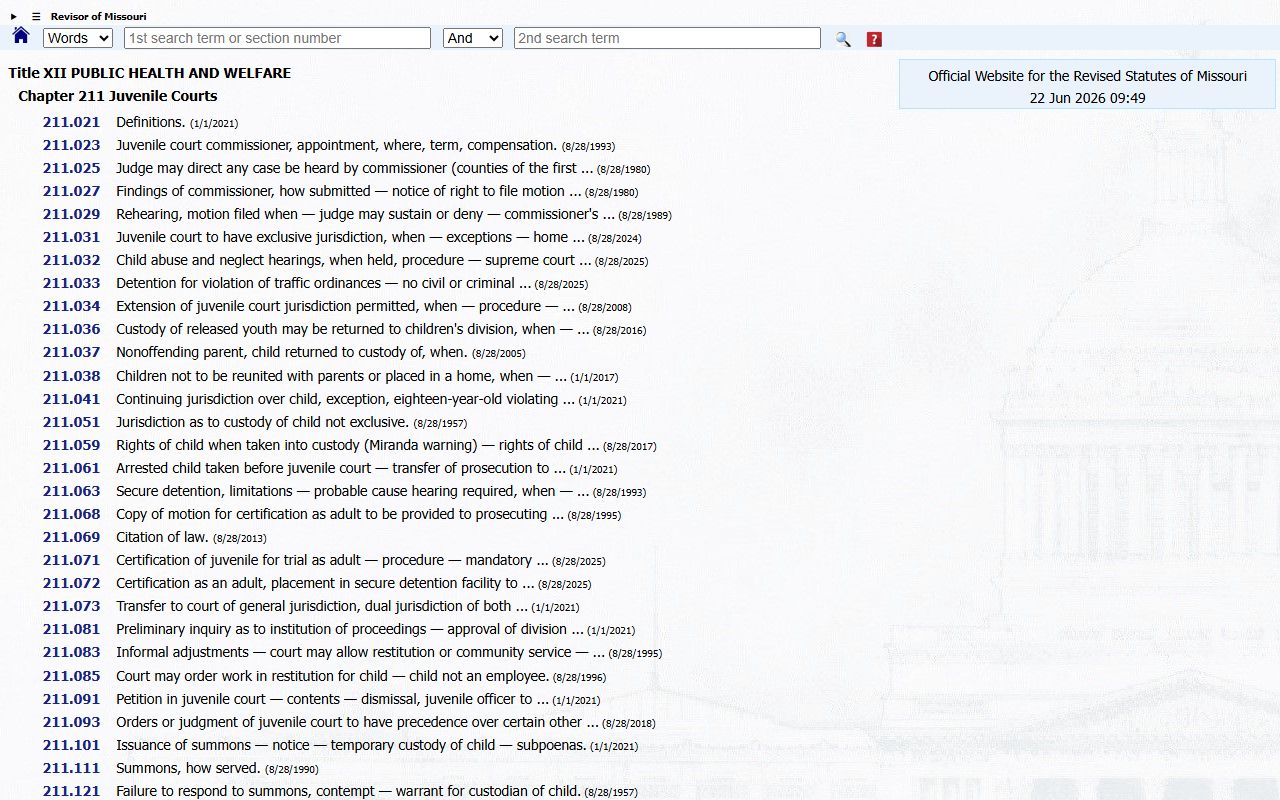
Juvenile confidentiality is one of the main reasons a searcher may not find a record that would be public in an adult case.
Restricted Iron County Criminal Records
Juvenile files are restricted under Missouri law. RSMo 211.319 identifies confidential juvenile records including medical, psychological, Children's Division, social history, home study, police, and law-enforcement materials. Access may require a court finding of legitimate interest.
The juvenile confidentiality source supports the access limits for Iron County criminal court records involving minors.
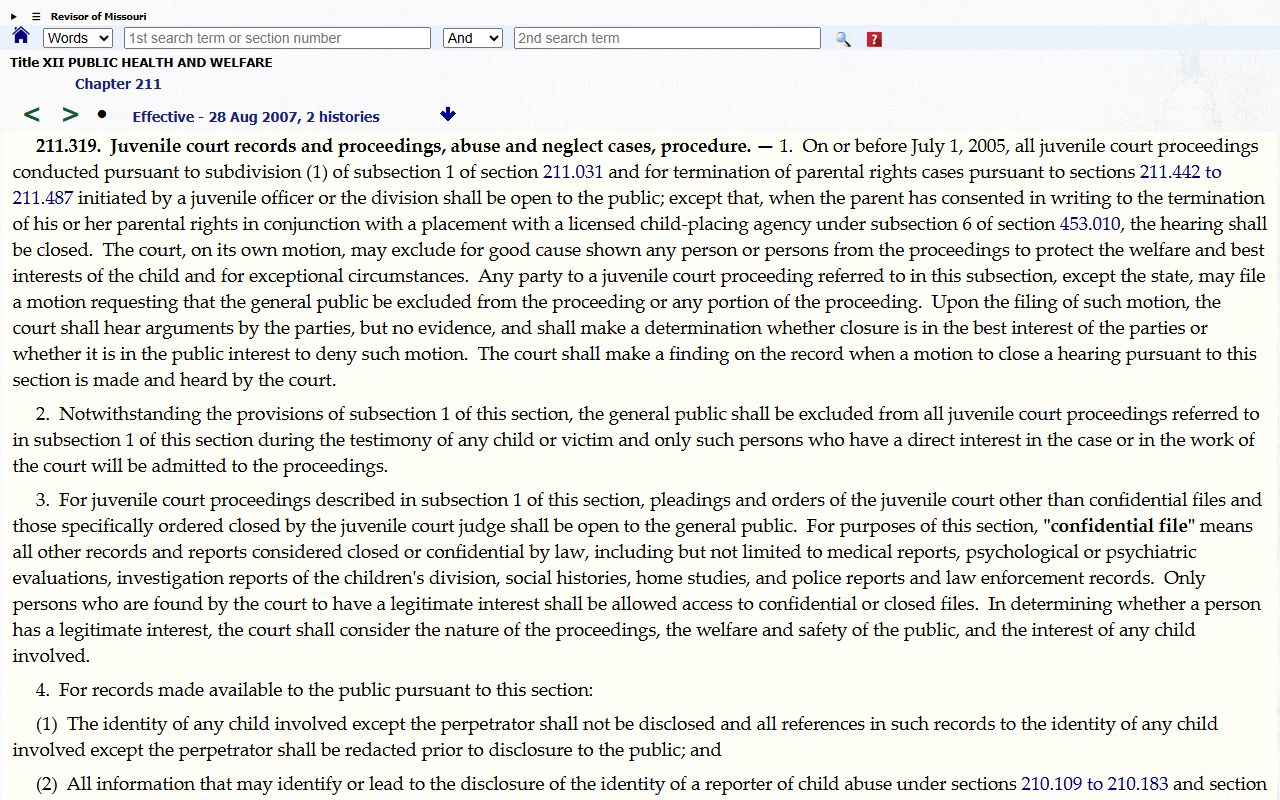
Adult criminal dockets may be public, but juvenile, sealed, expunged, adoption-linked, victim-protected, and medical information can still be blocked.
Adoption records are another strict example. RSMo 453.120 states adoption court files are not open to inspection or copy except by court order.
The adoption statute source is included because some family and juvenile court restrictions overlap with criminal-record search limits.
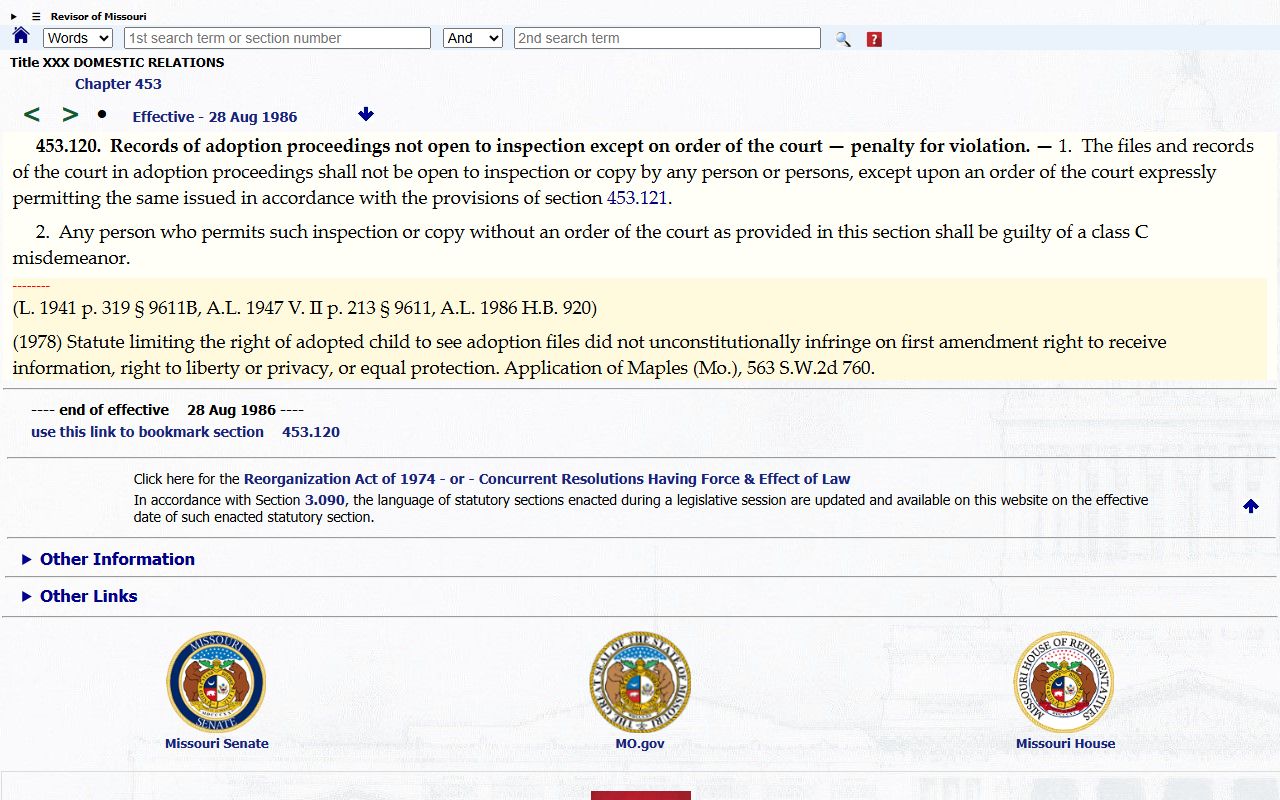
When a criminal search touches a sealed, juvenile, or adoption-related matter, the public docket may be only a narrow part of the record.
Public Record Search
Sponsored Results